
Webinars by year
 Registration |
Goran Glavaš (Universität Würzburg) Improving Multilingual Abilities of (Different Types of) Language Models (Thursday, December 4, 2025 - 15:00 CET) Improving Multilingual Abilities of (Different Types of) Language Models (Thursday, December 4, 2025 - 15:00 CET) Summary: Language models tend to excel in languages they see the most during (pre)training—leaving low-resource languages at a stark disadvantage. But what if we could boost performance without throwing (much) more data or compute at the problem? In this talk, I’ll present a set of resource-lean (read: “cheap”) strategies that enhance multilingual language understanding and generation in low-resource settings. I’ll show how conceptually effective knowledge transfer techniques—not just bigger models—can improve multilingual capabilities across three major fronts: (1) standard text-based LLMs, (2) vision-language models, and (3) code language models. The takeaway? Scaling isn’t the only answer: for truly inclusive multilingual language technology, we need stronger inductive biases and more conceptual innovation. Bio: Goran Glavaš is a Full Professor for Natural Language Processing at the University of Würzburg (Germany), Center for AI and Data Science (CAIDAS). His research focuses on multilingual language understanding and cross-lingual transfer, vision-and-language models, and trustworthiness of (multilingual) language models. He has (co-)authored over 120 publications in NLP and IR, regularly publishing at top-tier venues (ACL, EMNLP, NAACL, EACL, TACL, SIGIR, ECIR). He received the best long paper award at EACL 2021 and outstanding paper awards at EACL 2024 and ACL 2024. He served as an Editor-in-Chief of the ACL Rolling Review (ARR) and regularly serves as (Senior) Area Chair for top-tier NLP conferences. .... |
 Registration |
Ivan Vulić (University of Cambridge / Google DeepMind) On Merging and MoErging Models and Modules (Thursday, November 6, 2025 - 15:00 CET) Summary: Despite recent tendencies towards building large "monolithic" neural models, fine-tuned expert models and parameter-efficient specialised modules still offer gains over large monoliths in specific tasks and for specific data distributions (e.g., low-resource languages or specialised domains). Moreover, such modularisation of skills and expertise into dedicated models or modules allows for asynchronous, decentralised, and more efficient continuous model development, as well as module reusability. However, a central question remains: how to combine and compose these modules to enable positive transfer, sample-efficient learning, and improved out-of-domain generalisation. In this talk, after discussing the key advantages of modularisation and modular specialisation, I will provide an overview of prominent module and model composition strategies. I will focus on composition at the parameter level (model merging) and functional level (model MoErging), and then illustrate the usefulness of these techniques across several applications. Bio: Ivan Vulić is currently a Research Scientist at Google DeepMind in Zurich after spending a year there as a Visiting Researcher. Before that he was a Research Professor and a Royal Society University Research Fellow in the Language Technology Lab, University of Cambridge, where he spent 10 years across different research roles. From January 2018 until November 2024 he was also a Senior Scientist at PolyAI in London. Ivan holds a PhD in Computer Science from KU Leuven awarded summa cum laude. In 2021 he was awarded the annual Karen Spärck Jones Award from the British Computing Society for his research contributions to Natural Language Processing and Information Retrieval. His core expertise and research interests span, among others, cross-lingual, multilingual and multi-modal representation learning, modularity and composability of ML models, sample-efficient, parameter-efficient and few-shot ML, conversational AI, data-centric ML. .... |
 Registration |
Jose Camacho-Collados (Cardiff University) How Language Models Navigate Culture in a Multilingual World (Thursday, October 16, 2025 - 15:00 CET) Summary: Language models have become ubiquitous in NLP and beyond. In particular, the new wave of large language models (LLMs) are increasingly used to communicate and solve practical problems in many languages and countries, and by an increasingly diverse set of users. However, even though there is no doubt that these models open up plenty of opportunities, there are important issues and research questions that arise when it comes to LLMs and their application in different languages and cultures. For instance, the language coverage in language models drastically decreases for less-resourced languages and as such, their performance. And not only the general performance is affected, but general-purpose LLMs may be implicitly biased to specific cultures and languages depending on their underlying training data. In this talk, I will discuss how language models reflect on cultural diversity, including potential shortcomings and how language coverage and cultural awareness may be intrinsically intertwined. I will also share some lessons learned based on our recent research in this area, including a large effort to develop a cultural benchmark of everyday knowledge for dozens of languages and countries. Bio: Jose Camacho-Collados is a UKRI Future Leaders Fellow and Professor at the School of Computer Science of Cardiff University, where he co-founded the Cardiff Natural Language Processing group (Cardiff NLP). Before joining Cardiff University, he completed his PhD in Sapienza University of Rome and was a Google AI PhD Fellow. Jose has worked in multiple NLP areas with a particular focus on semantics, multilinguality and computational social science with an interdisciplinary perspective. In this area, he has been developing specialised and efficient NLP models for social media applications, such as TweetNLP and related efforts. His work has received several recognitions, including awards at top NLP conferences, and the 2023 AIJ Prominent Paper Award. He is also the co-author of the “Embeddings in Natural Language Processing” book. .... |
 Registration |
Sampo Pyysalo (University of Turku) Towards Open Foundation Models for Europe (Tuesday, May 13, 2025 - 10:00 CET) Summary: Large Language Models (LLMs) are a breakthrough technology with broad social and economic effects. However, the development of leading models is currently concentrated in a few technology hubs primarily in the U.S. and China, leaving smaller languages behind and making Europe dependent on external technologies. To secure its digital sovereignty and ensure that its languages are fully represented, it is essential for Europe to have the capacity to build its own foundation models. In this talk, I will present a line of LLM work ranging from early monolingual models for Finnish to current efforts to create fully open foundation models for all European languages in the OpenEuroLLM project. Bio: Sampo Pyysalo is one of the leads of the TurkuNLP group (https://turkunlp.org/) in the University of Turku, Finland. His work focuses on machine learning for natural language processing, with particular emphasis on scientific text mining, Finnish language technology, and large language models. He received his PhD thesis from the University of Turku and held researcher positions at the University of Tokyo, University of Manchester and University of Cambridge before returning to the University of Turku in 2019. He is currently PI in the HPLT (https://hplt-project.org/) and OpenEuroLLM (https://openeurollm.eu/) projects, where he leads efforts to train multilingual language models. .... |
 Registration |
Emanuele Bugliarello (Google DeepMind) Towards Inclusive Multimodal AI (Thursday, April 3, 2025 - 15:00 CET) Summary: Visual assistants are becoming ubiquitous, yet their effectiveness varies drastically across languages and cultures. This talk presents an overview of the critical issue of multicultural disparity in image–text models. We'll explore this gap through three lenses: evaluation, training, and generation. First, I'll introduce benchmarks like MaRVL designed to quantify multilingual and multicultural competence. Next, we'll delve into techniques for mitigating these disparities in model training. Finally, we'll examine the emerging challenges and opportunities in multicultural visual generation. Bio: Emanuele Bugliarello is a research scientist at Google DeepMind based in Grenoble, France where he works on improving evaluation and capabilities of multimodal generative models. He completed his PhD in the NLP Section at the University of Copenhagen, while spending time at DeepMind, Google, Mila and Spotify. Previously, he studied computer and communication sciences at EPFL, Tongji University and Politecnico di Torino. .... |
 Registration |
Christian Herff (Maastricht University) Speech neuroprostheses based on intracranial EEG (Thursday, March 6, 2025 - 15:00 CET) Summary: Speech is our most natural way of communication and the loss of the ability to speak is therefore devastating to patients. A speech neuroprostheses that directly reconstructs speech processes from neural activity could provide a new means of communications to these severely affected patients. In this presentation, I will present some approaches to reconstruct different representations of speech from intracranial recordings and highlight how they can be used to build a speech neuroprosthesis. The decoding of speech processes is particularly challenging, as not only the neural, but also the target signal has complex, nonlinear dynamics. I will stress the use of interpretable machine learning models for this task to ensure that meaningful activity is decoded and scientific insights might be generated as a side product. Bio: Dr. Christian Herff is an assistant professor in the School for Mental Health and Neuroscience at Maastricht University where he leads the invasive BCI research line. His research interest lays in the application of machine learning technology to neurophysiological data for Brain-Computer Interfaces and neuroscience research. With a particular focus on the decoding of speech processes from intracranial data, he tries to improve the lives of severely paralyzed patients while simultaneously improving our understanding of complex higher order cognition. He emphasizes the ability to achieve interpretable results based on computational models. In particular, visualization of complex dynamic models, such as deep neural networks, is of interest to him. .... |
 Registration |
Sebastian Ruder (Meta) Multilingual LLM Evaluation in Practical Settings (Thursday, February 6, 2025 - 15:00 CET) Summary: Large language models (LLMs) are increasingly used in a variety of applications across the globe but do not provide equal utility across languages. In this talk, I will discuss multilingual evaluation of LLMs in two practical settings: conversational instruction-following and usage of quantized models. For the first part, I will focus on a specific aspect of multilingual conversational ability where errors result in a jarring user experience: generating text in the user’s desired language. I will describe a new benchmark and evaluation of a range of LLMs. We find that even the strongest models exhibit language confusion, i.e., they fail to consistently respond in the correct language. I will discuss what affects language confusion, how to mitigate it, and potential extensions. In the second part, I will discuss the first evaluation study of quantized multilingual LLMs across languages. We find that automatic metrics severely underestimate the negative impact of quantization and that human evaluation—which has been neglected by prior studies—is key to revealing harmful effects. Overall, I highlight limitations of multilingual LLMs and challenges of real-world multilingual evaluation. Bio: Sebastian Ruder is a research scientist at Meta based in Berlin, Germany where he works on improving evaluation and benchmarking of large language models (LLMs). He previously led the Multilinguality team at Cohere with the objective to improve the multilingual capabilities of Cohere's LLMs. Before that he was a research scientist at Google DeepMind. He completed his PhD in Natural Language Processing (NLP) at the Insight Research Centre for Data Analytics, while working as a research scientist at Dublin-based text analytics startup AYLIEN. Previously, he studied Computational Linguistics at the University of Heidelberg, Germany and at Trinity College, Dublin. .... |
 Registration |
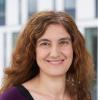
Mirella Lapata (The University of Edinburgh) Prompting is *not* all you need! Or why Multi-LLM Collaboration Matters (Thursday, June 5, 2025 - 15:00 CET) Summary: Recent years have witnessed the rise of increasingly larger and more sophisticated language models (LMs) capable of performing every task imaginable, sometimes at (super)human level. In this talk, I will argue that in many realistic scenarios solely relying on a single general-purpose LLM is suboptimal. A single LLM is likely to under-represent real-world data distributions, heterogeneous skills, and task-specific requirements. Instead, I will discuss Multi-LLM collaboration as an alternative for compositional generative modeling. This approach leads to more effective problem-solving while being more inclusive and explainable. I will focus on narrative story generation tasks and demonstrate how these can be tackled by orchestrating a society of agents --- each pursuing individual goals while collectively working toward the overall task objective. Additionally, I will explore how these agent societies leverage reasoning to improve performance. Bio: Mirella Lapata is professor of natural language processing in the School of Informatics at the University of Edinburgh. Her research focuses on getting computers to understand, reason with, and generate natural language. She is the first recipient (2009) of the British Computer Society and Information Retrieval Specialist Group (BCS/IRSG) Karen Sparck Jones award and a Fellow of the Royal Society of Edinburgh, the ACL, and Academia Europaea.
Mirella has also received best paper awards in leading NLP conferences and has served on the editorial boards of the Journal of Artificial Intelligence Research, the Transactions of the ACL, and Computational Linguistics. She was president of SIGDAT (the group that organizes EMNLP) in 2018. She has been awarded an ERC consolidator grant, a Royal Society Wolfson Research Merit Award, and a UKRI Turing AI World-Leading Researcher Fellowship.
.... |
 Registration |
André F. T. Martins (Universidade de Lisboa) xCOMET, Tower, EuroLLM: Open & Multilingual LLMs for Europe (Thursday, May 8, 2025 - 15:00 CET) Summary: Today, LLMs are Swiss knives and MT one of their tools. Is this the end of MT research? In this talk, I argue that the connection between LLM and MT research is two-way. I present some of our recent work advancing multilingual LLMs, tools to estimate their quality, and how the two can be combined for test-time scaling. First, I present xCOMET, an open-source learned metric which integrates sentence-level evaluation and error span detection, exhibiting state-of-the-art performance across all types of meta-evaluation (sentence-level, system-level, and error span detection). Moreover, it does so while highlighting and categorizing error spans, thus enriching the quality assessment. Then, I present Tower, a suite of open multilingual LLMs for translation-related tasks. Tower models are created through continued pretraining on a carefully curated multilingual mixture of monolingual and parallel data. The combination of Tower with COMET reranking obtained the best results in 8 out of 11 language pairs in the WMT General Translation shared task, according to human evaluation. Finally, I describe EuroLLM, an ongoing EU-made project whose goal is to train an open multilingual LLM from scratch using the European HPC infrastructure (EuroHPC). The last release (EuroLLM-9B) supports 35 languages, including all 24 official EU languages, and it achieves strong results in various benchmarks, comparable or better than the best existing models of similar size. xCOMET: https://huggingface.co/collections/Unbabel/xcomet-659eca973b3be2ae4ac023bb Tower: https://huggingface.co/collections/Unbabel/tower-659eaedfe36e6dd29eb1805c EuroLLM: https://huggingface.co/blog/eurollm-team/eurollm-9b Bio: André F. T. Martins (PhD 2012, Carnegie Mellon University and Instituto Superior Técnico; https://andre-martins.github.io/) is an Associate Professor at Instituto Superior Técnico, University of Lisbon, researcher at Instituto de Telecomunicações, and the VP of AI Research at Unbabel. His research, funded by a ERC Starting Grant (DeepSPIN) and Consolidator Grant (DECOLLAGE), among other grants, include machine translation, quality estimation, structure and interpretability in deep learning systems for NLP. His work has received several paper awards at ACL conferences. He co-founded and co-organizes the Lisbon Machine Learning School (LxMLS), and he is a Fellow of the ELLIS society and co-director of the ELLIS Program in Natural Language Processing. He is a member of the R&I advisory group of EuroHPC, the European infrastructure for supercomputing. .... |
 Registration |
Ekaterina Shutova (University of Amsterdam) Canceled. Cross-lingual information sharing in multilingual language models (Thursday, January 30, 2025 - 15:00 CET) Summary: Multilingual language models (MLMs), such as XLM-R or BLOOM, are pretrained on data covering many languages and share their parameters across all languages. This modeling approach has several powerful advantages, such as allowing similar languages to exert positive influence on each other, and enabling cross-lingual task transfer (i.e., fine-tuning on some source language(s), then using the model on different target languages). The success of such transfer, however, depends on the model's ability to effectively share information between different languages in its parameter space. Yet, the cross-lingual information sharing mechanisms within MLMs are still not fully understood. In this talk, I will present our recent research that investigates this question from three different perspectives: encoding of typological relationships between languages within MLMs, language-wise modularity of MLMs and the influence of training examples in specific languages on predictions made in others. Bio: Ekaterina Shutova is an Associate Professor at the ILLC, University of Amsterdam, where she leads the Amsterdam Natural Language Understanding Lab and the Natural Language Processing & Digital Humanities research unit. She received her PhD from the University of Cambridge, and then worked as a research scientist at the University of California, Berkeley. Ekaterina’s current research focuses on few-shot learning for language interpretation tasks, multilingual NLP, generalisability and robustness of NLP models and interpretability in deep learning. Her prominent service roles include Program Chair of ACL 2025, Senior Action Editor of ACL Rolling Review, Action Editor of Computational Linguistics and Demonstrations chair at EMNLP 2022. She is also an ELLIS scholar. .... |